
How to choose a tracking device
Many types of devices use different technologies to track the location of a vehicle, equipment, cargo, animal or another asset.
This article covers the main types of widely available trackers and explains which solution is best suited to each usage scenario.
Tracking devices can broadly be divided into three groups:

Online trackers (Real-time tracking)
Autonomous trackers (No external power required)
Bluetooth tracking tags (AirTag / SmartTag)
1
Online trackers
What are they used for?
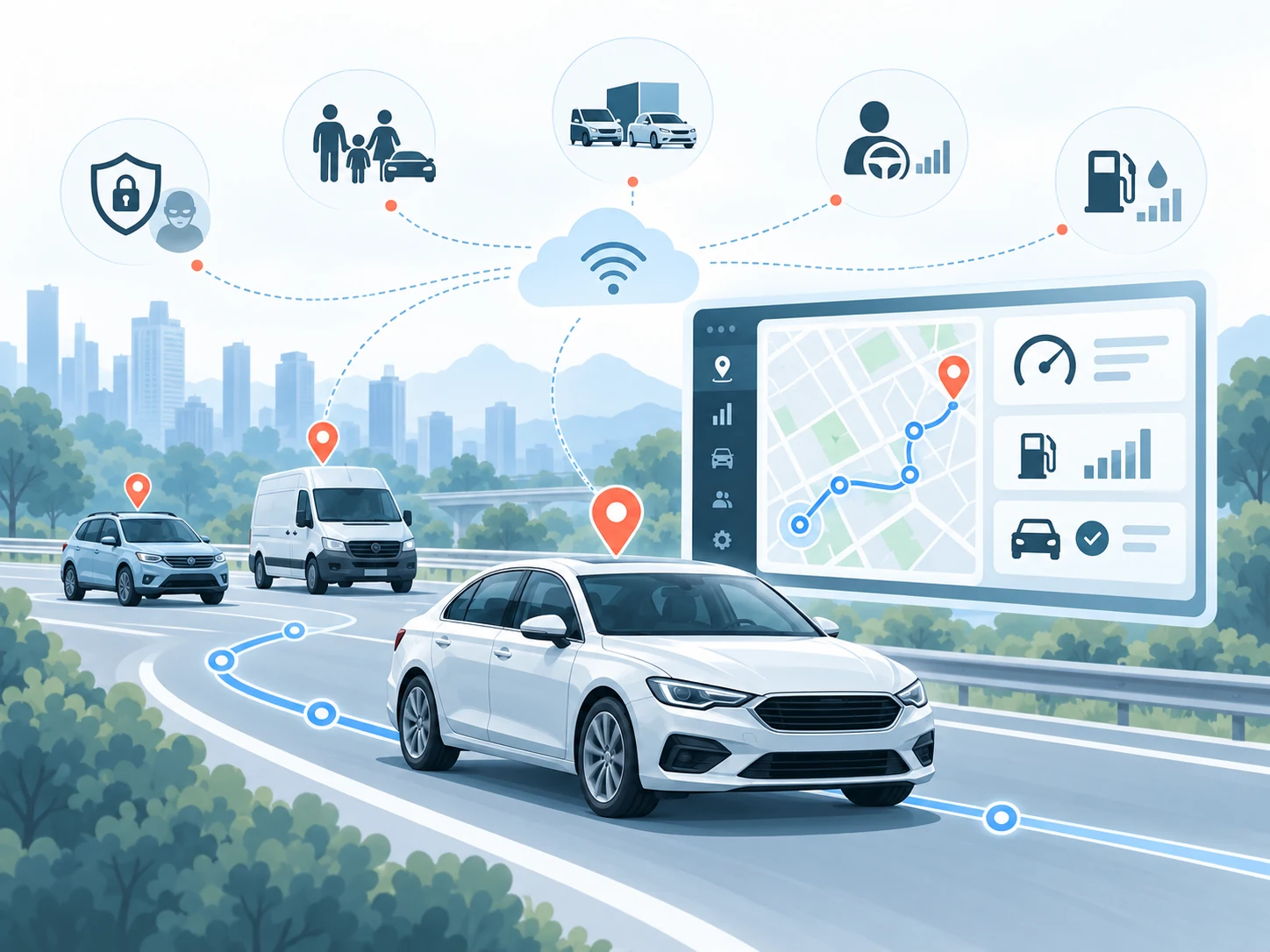
These devices are commonly used to:
- provide additional protection against vehicle theft
- track vehicles used by family members
- monitor company vehicles and fleets
- monitor drivers and vehicle use
- track fuel and operational data
How does it work?
These devices contain a GPS module that receives satellite positioning signals. The device sends the location to a server over mobile internet, and server software displays the coordinates on a map so you can track its location.
These trackers generally connect to a vehicle or equipment's electrical system. Some models need only a power connection, while others can also connect to the CAN bus or OBD2 socket.
A CAN or OBD2 connection can provide additional vehicle data beyond location. Depending on the device and vehicle model, this may include mileage, fuel level, engine status and usage information.
Some systems offer additional remote vehicle functions, such as remote engine starting or preventing the engine from starting.
How do online tracking systems work?

1 — Data collection
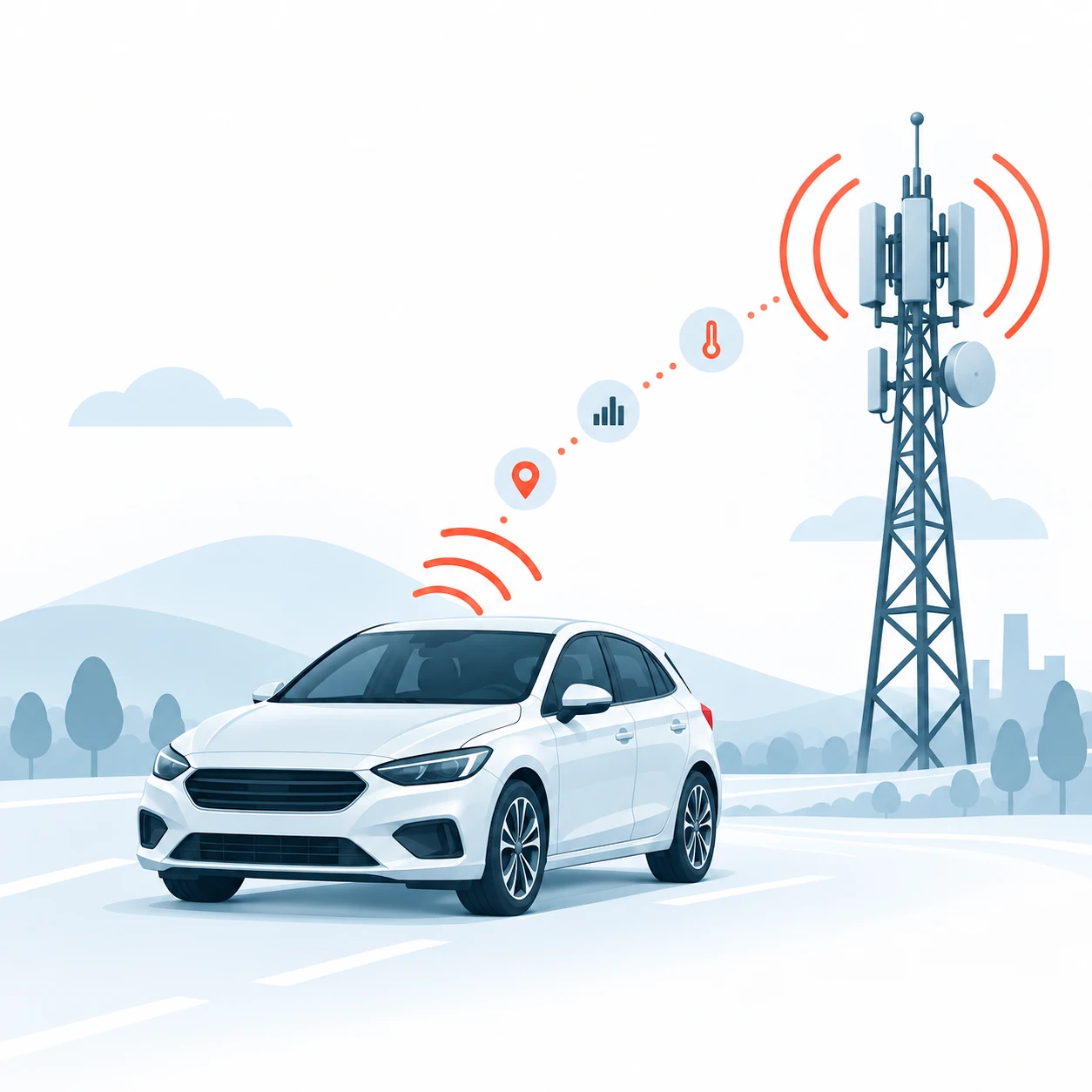
An online tracker in the vehicle determines its location using satellite signals and collects movement, temperature and other data.
2 — Data transmission
The device sends collected data to the TelemaTek server over a GSM mobile internet connection.
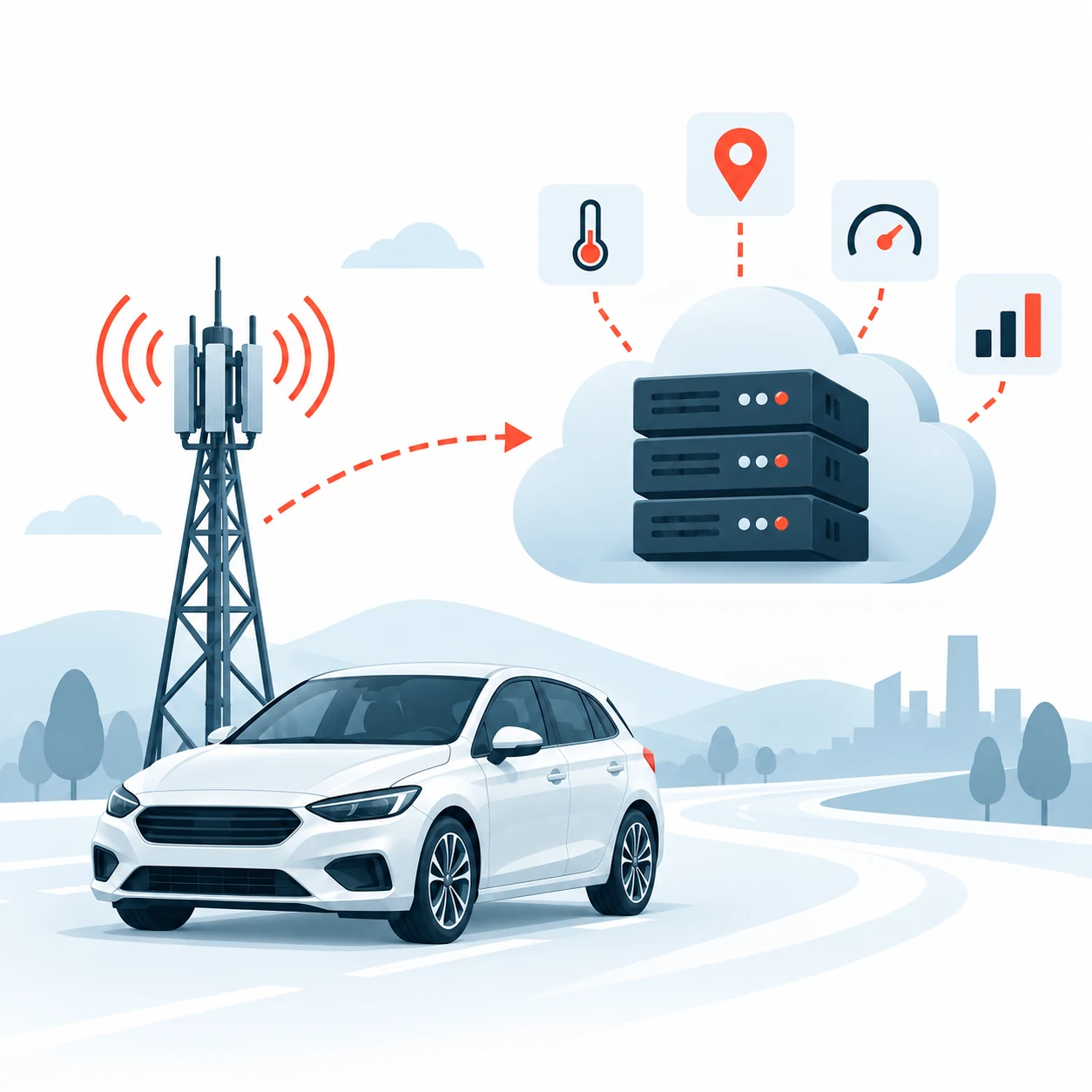
3 — Data processing
The TelemaTek server processes incoming device data and prepares it for display in the user dashboard.

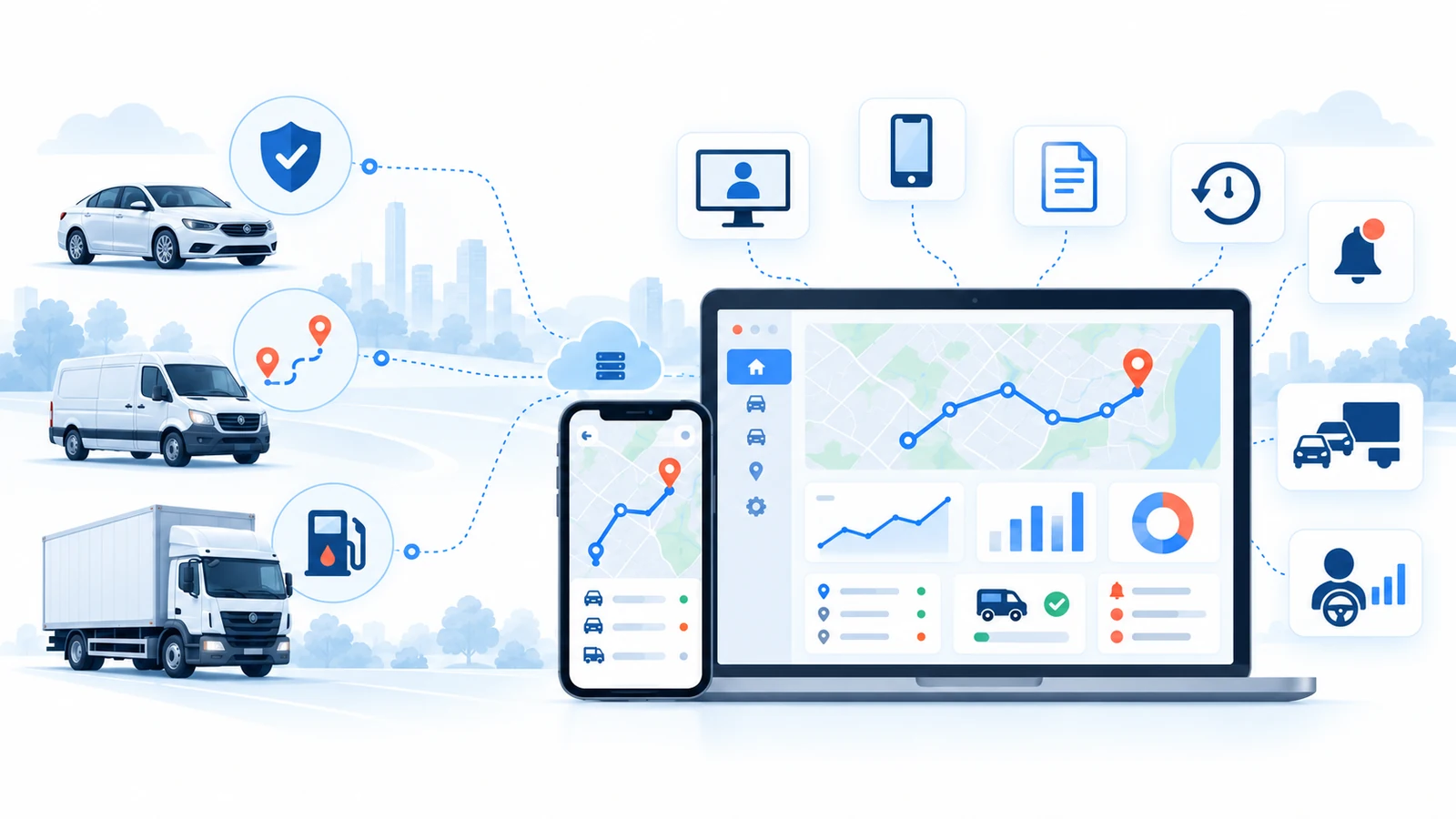
4 — Data visualisation
In TelemaTek Panel, the user can view vehicle location, movement history, and temperature and activity charts.
What is the main difference between these devices?
Many manufacturers offer online trackers that operate on similar principles.
The basic operating logic is largely the same. A major difference for the user is the software and services provided with the device.
For example:
- the user dashboard,
- the mobile app,
- reports,
- location history,
- notifications,
- vehicle and driver analysis.
When choosing a device, consider not only its specifications but also how easy its management software is to use.
Which device is right for you?
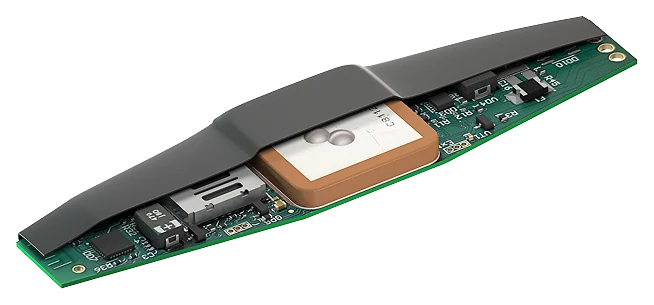
If you only need the vehicle's location, an advanced CAN-connected system may be unnecessary. A simple GPS tracker requiring only a power connection can be used in many vehicles.

If you also need operating status, mileage, fuel information or other technical data, choose a device supporting the CAN bus.
In that case, check compatibility with your specific vehicle make and model.

Advantages
- Powered by the vehicle or equipment's high-capacity battery.
- Can stay connected and transmit current location data regularly.
- Location information can be updated frequently.
- Additional vehicle data is available through CAN or OBD2.
- May offer security, fuel monitoring, usage history and fleet management functions.
Disadvantages
- Depends on the vehicle's electrical system.
- Operation may be affected if the main battery is disabled or disconnected.
- Professional installation is often required for reliable use.
- CAN-connected systems must be compatible with the vehicle.
How to choose
Review the dashboards and mobile apps offered by different manufacturers.
Since basic GPS tracking functions are similar across many devices, software usability and manufacturer services often make the biggest difference in daily use.
Before buying, check whether professional installation is available and whether it costs extra.
Also compare these costs:
- device purchase price,
- monthly or annual subscription,
- SIM card and mobile data,
- installation,
- maintenance and technical support.
2
Autonomous trackers
What are they used for?
Autonomous trackers are particularly useful for:
- tracking cars, motorcycles and machinery against theft
- helping locate a stolen or lost asset
- tracking containers, trailers and other equipment
- monitoring vehicles or machinery parked for long periods
- tracking valuable cargo in transit
- monitoring the location of large animals, such as cattle or horses.
How does it work?
Autonomous trackers operate on a similar principle to online trackers. Their GPS module receives satellite positioning signals, and the information is sent to a server over mobile internet.
The main difference is that they run on their own batteries, independently of a vehicle or equipment's electrical system.
With limited stored energy, these devices generally do not stay continuously online. Instead, they wake at intervals or according to a schedule to send their location.
For example, a device can send its location:
- every 10, 20 or 30 minutes
- every few hours
- once a day
- at a specified time
- according to the selected schedule.
Some manufacturers allow more frequent transmissions. However, frequent positioning and continuous data transmission significantly increase energy consumption and shorten battery life.
What types of autonomous trackers are available?
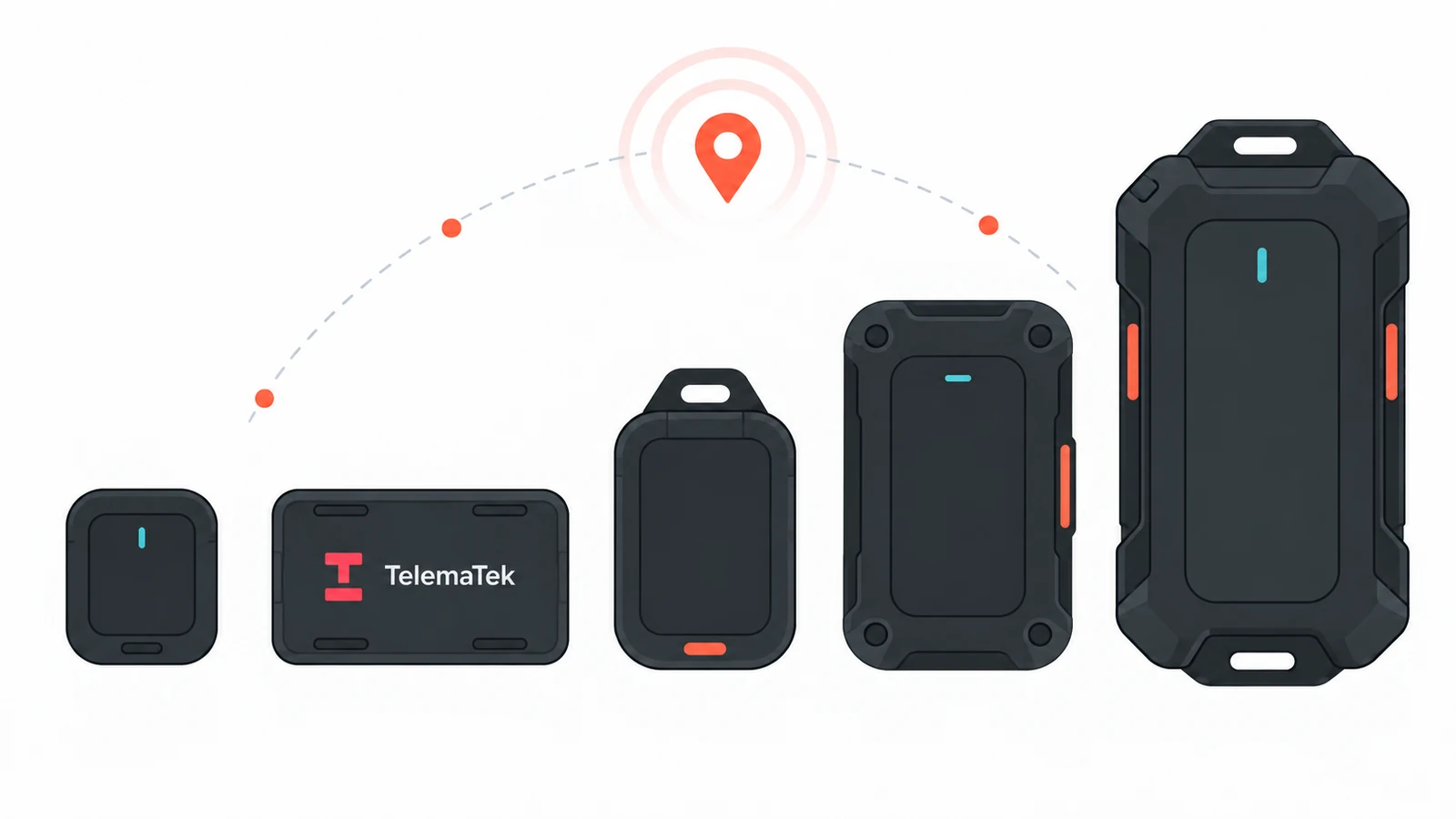
Autonomous trackers differ in their intended use and design.
Small devices may suit animals, motorcycles or small valuables. Larger devices with higher-capacity batteries may be preferred for containers, machinery, trailers or equipment that can remain stationary for long periods.
The main differences include:
- battery capacity and operating life
- device size
- positioning methods
- data transmission methods
- operating temperature range and weather resistance
- the manufacturer's software and dashboard
Which device is right for you?
Consider tracking frequency, required operating life and environmental conditions together.


If you need continuous or online tracking, a readily rechargeable device suited to everyday use may be more practical. USB-rechargeable trackers, smartwatches or a smartphone can serve this purpose. Phone-based location tracking apps may also be suitable.

Autonomous trackerscan provide a reliable option for additional theft protection and long-term tracking. For prolonged use, consider battery type and capacity alongside suitability for low and high temperatures and demanding weather.
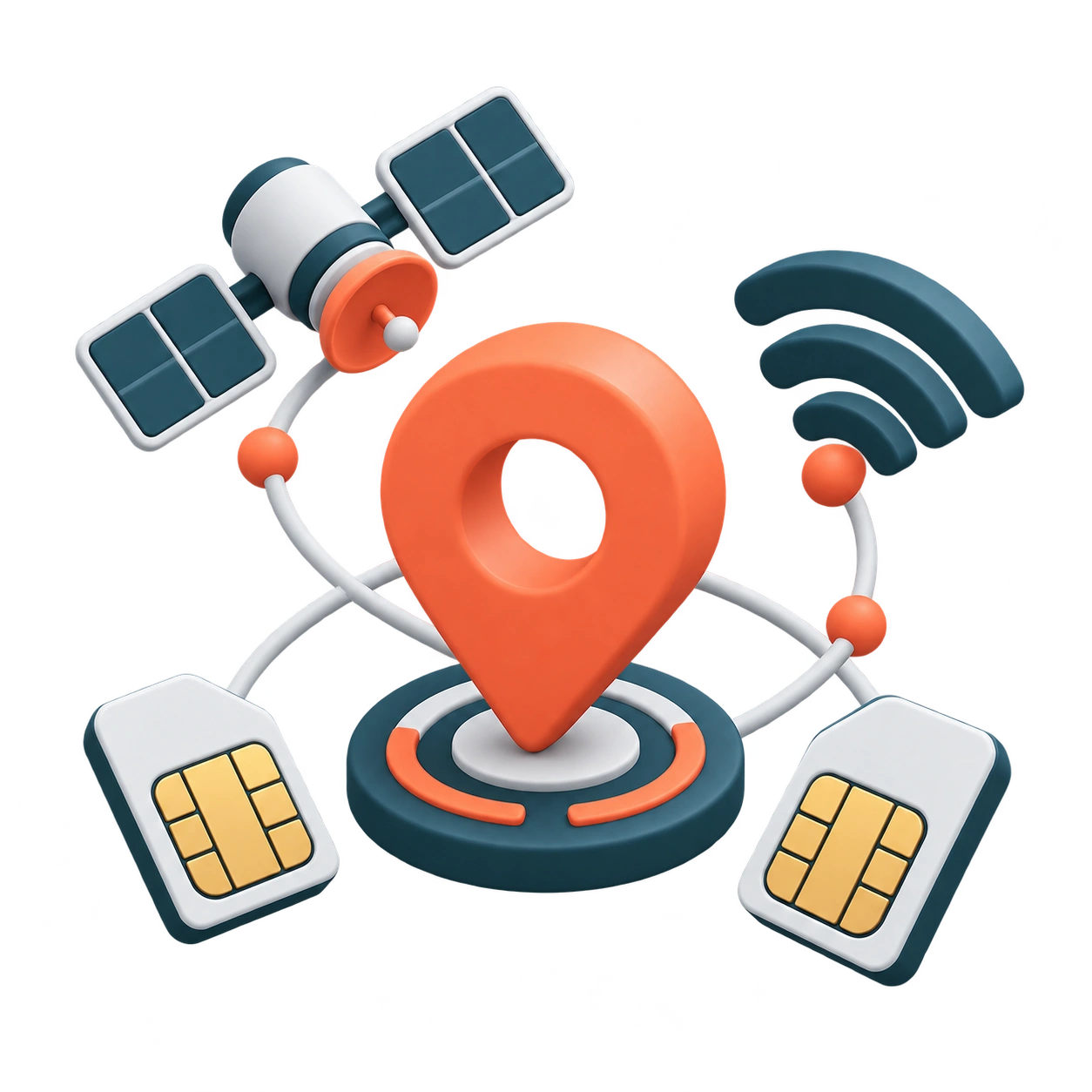
Multiple GSM communication channels can improve transmission reliability, while different positioning methods improve the chance of obtaining a location under different conditions. Advanced autonomous trackers can combine GPS, Wi-Fi/LBS and GSM/LBS.
Advantages
- Quick and easy installation.
- No modification of the electrical system required.
- Professional installation is usually unnecessary.
- Without a fixed installation point, the device is harder to find and disable.
- Operates independently of the vehicle or equipment's main battery.
- Can continue operating when the vehicle battery is flat or removed.
- Unlike Bluetooth tags, it does not need nearby devices to determine or transmit its location.
Disadvantages
- Limited battery capacity makes it unsuitable for continuous online tracking.
- The user cannot always see a live location, only the latest location transmitted by the device.
- More frequent transmissions shorten battery life.
- The battery needs periodic replacement or recharging, depending on its type.
How to choose
Choosing an autonomous tracker calls for more careful assessment than choosing an online tracker.
The device must operate for as long as possible on a limited energy supply, making the efficiency of its electronics, communication methods and operating algorithms particularly important.
Four main criteria matter when choosing an autonomous tracker:
- Positioning quality and methods. Multiple positioning methods improve the chance of obtaining location information under different conditions.
- Transmission reliability. One or two SIM cards and, where available, alternative communication options can improve the chance of successful data transmission.
- Battery life. Assess how long the device can operate without battery replacement or recharging.
- Management software. The dashboard, location history, notifications, reports and remote configuration features matter in daily use.
3
Bluetooth tracking tags
What are they used for?
- keys
- bags
- suitcases
- bicycles
- personal belongings
and other objects that may be misplaced.
They can be particularly useful in cities, airports, shopping centres and public transport, where many phones are present.

How does it work?
These products do not operate like conventional tracking devices.
They contain no SIM card, GSM module or GPS receiver. They cannot determine their own location or exchange data over the internet independently. Bluetooth tags simply broadcast a unique identifier using BLE (Bluetooth Low Energy).
If a passing phone has Bluetooth enabled, it can detect this identifier and send its own location at that moment to the relevant network. These systems commonly use:
- Google Find Hub
- Apple Find My
networks.
The mapped location is not determined directly by the tag: it comes from the phone that detected it.
Put simply, nearby phones help determine a Bluetooth tag's location.
More compatible phones nearby increase the likelihood of a new location report. Without a nearby phone able to detect the tag, no new location can be reported.
How do Bluetooth tracking tags work?
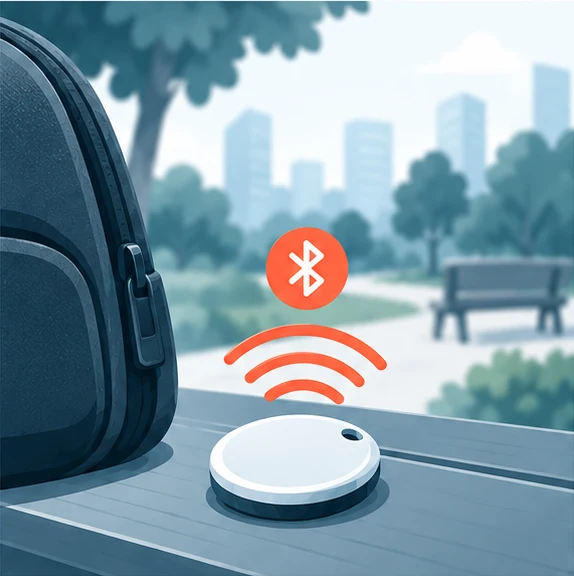
1 — Broadcasting a Bluetooth signal
The tag broadcasts Bluetooth signals containing its unique identifier near the object it is attached to.

2 — Detection by nearby devices
Compatible smartphones passing nearby detect the signal and associate it with their own location.
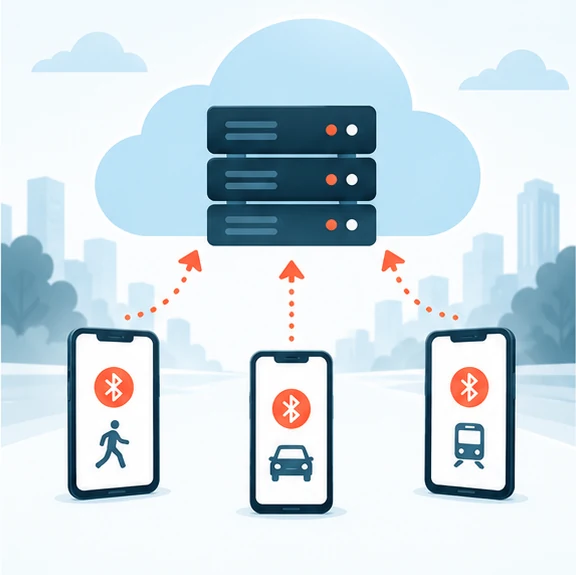
3 — Transmitting location information
Phones that detect the tag send location information over the internet to the tracking network's servers.

4 — Displaying the location on a map
The user can see where the tag was last detected in the tracking app. Without a nearby compatible phone, the location is not updated.
Advantages
- Very easy to start using.
- No mounting or professional setup required.
- Compact enough to place in different discreet locations.
- Generally low energy consumption.
Disadvantages
- Cannot determine their location independently.
- Cannot transmit over mobile internet independently.
- Location updates depend on nearby devices.
- Depend on networks such as Apple Find My or Google Find Hub.
- No new location reports without nearby compatible phones.
- Unwanted tracking alerts limit discreet tracking applications.
How to choose
The basic operating principle is largely the same across Bluetooth tags:
A device broadcasts a unique Bluetooth identifier; nearby compatible phones detect it and send location information to the relevant network.
Supported network and compatibility with your phone matter more than the brand alone.
Pay particular attention to:
- support for Apple Find My or Google Find Hub
- compatibility with your phone
- battery life
- device size
- audible finding features
- ease of use
Choose a model compatible with your phone and ecosystem, with suitable size and battery life.
Unwanted tracking alerts
Alerts against unauthorised tracking. From 2024, Apple and Google introduced cross-platform alerts to help prevent unwanted or unauthorised tracking.
If a Bluetooth tag that does not belong to you moves with you for an extended period, your phone may detect it and warn that an unknown tracker is nearby. In some cases, you can access options to help find the tag or make it play a sound.
A limitation for discreet theft protection. These features benefit personal safety, but can limit the use of Bluetooth tags for discreet tracking of vehicles, equipment and valuable assets against theft.
The person carrying the tag may receive a phone alert about its presence. In other words, the tracking tag may reveal itself.
Where are they useful? Bluetooth tags report their location through nearby compatible phones, making them useful in cities, airports, shopping centres and public transport where many phones are present.
If a vehicle or equipment remains in an area with few people and phones, new location information may be unavailable for a long time.
Bluetooth tags are therefore well suited to finding keys, bags, suitcases and personal belongings. For discreet theft protection, they are not a direct replacement for GPS/GSM trackers that determine their own location and transmit without nearby devices.
| Feature | Online trackers | Autonomous trackers | Bluetooth tracking tags |
|---|---|---|---|
| Location information | Frequent updates, close to real time | Sends location at scheduled intervals | Does not determine location independently |
| Data transmission | Directly over mobile internet | Directly over mobile internet | Through nearby compatible phones |
| Power source | Usually connected to the vehicle or equipment's electrical system | Runs on its own battery | Usually runs on a small battery |
| Installation | Often requires professional installation | Usually requires no professional installation | No installation required |
| Main advantage | Current location and additional vehicle data | Long operation independent of external power | Easy use, compact size and low power consumption |
| Main limitation | Operation may be affected if power is disconnected | Unsuitable for continuous online tracking | Depends on nearby phones for location reports |
| Discreet tracking | Depends on installation | Suitable | Limited by unwanted tracking alerts |
| Best suited to | Vehicle and fleet tracking | Theft protection for vehicles, equipment, containers and valuable assets | Keys, bags, suitcases, bicycles and personal belongings |
Which tracker is right for you?
Online tracker
Best when you need the most current location possible and additional vehicle data. It requires external power and usually professional installation.
01
Autonomous tracker
Better suited when continuous online tracking is unnecessary and independent operation matters. Professional installation is usually unnecessary.
02
Bluetooth tracking tag
The simplest and usually most economical option. Low power consumption can provide long battery life, but the tag does not determine its own location or send data over mobile internet. Location reports depend on nearby compatible phones.
03

Positioning
What is positioning and how does it work?

How does satellite positioning work?
Learn how satellite signals are received, what affects signal quality and why correct device placement matters.
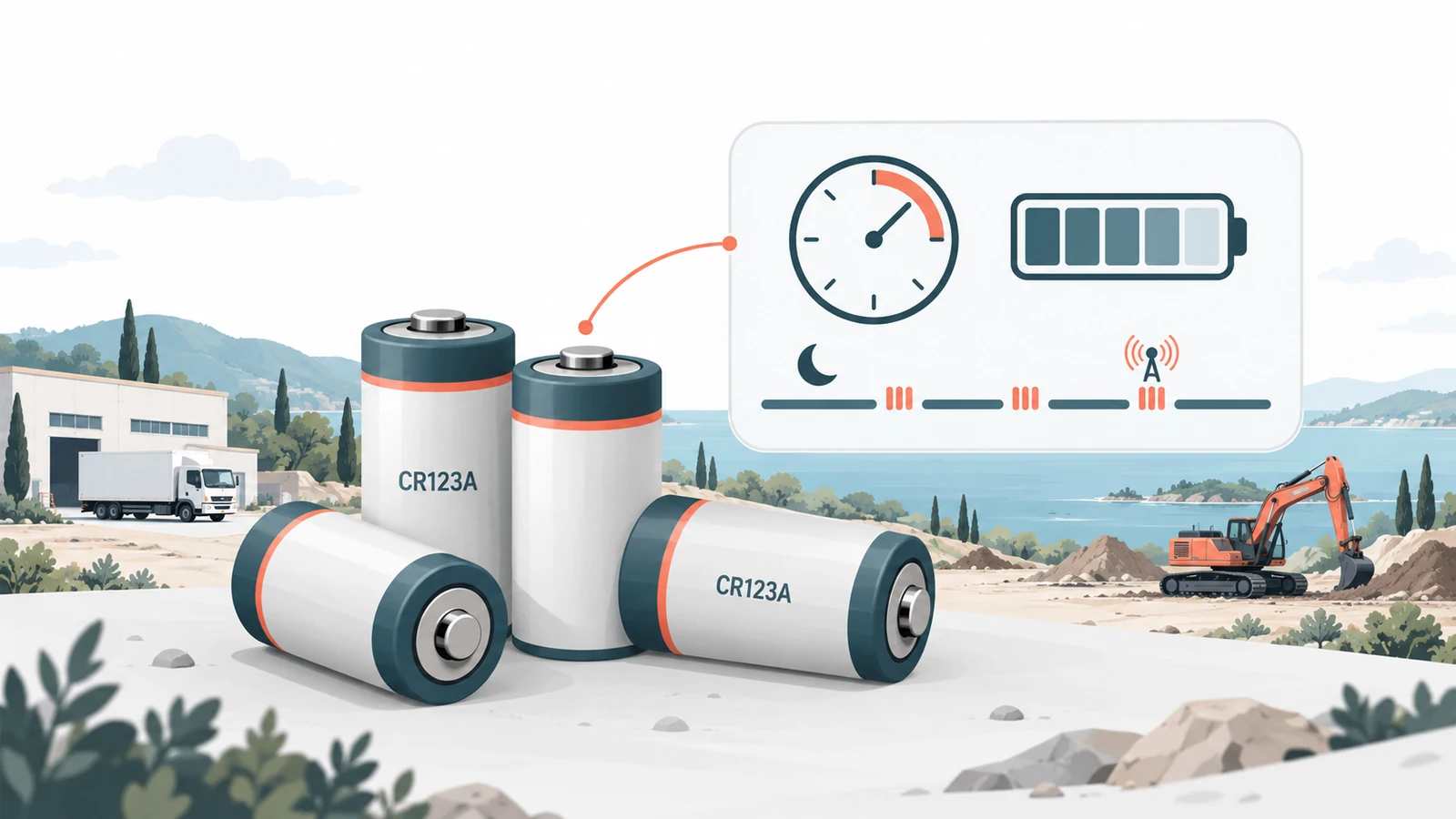
How is long battery life achieved?
Learn how battery choice, transmission frequency and operating conditions affect İM3L battery life.

Temperature charts
Creating temperature charts with the TelemaTek İM3L device.